Sound Bath Benefits: What to Expect and What the Research Shows
Reviewed by Yuli Ziv, Founder & CEO of Heallist
Disclaimer: This article is for education, not medical advice. Talk to a qualified healthcare professional before making health decisions. Heallist doesn't provide medical services or verify practitioners.
Sound baths use instruments such as singing bowls, gongs, and chimes to create an immersive listening experience that encourages relaxation, mindfulness, and emotional well-being. Many participants report feeling calmer, less tense, and more emotionally balanced after a session. Emerging research offers encouraging insights into the potential benefits of sound-based practices for stress reduction and mood. Whether you're seeking a moment of stillness or exploring new ways to support your well-being, sound baths can be a meaningful addition to your holistic wellness routine.
Sound baths have become a popular wellness practice, offering an opportunity to rest, listen, and disconnect from everyday distractions.
You may have seen sessions featuring crystal singing bowls, Tibetan-style metal bowls, gongs, or soft chimes, often accompanied by promises of emotional release, nervous-system regulation, or energetic transformation.
But how much of this is supported by research?
Understanding the difference between a relaxing wellness ritual and a clinical treatment can help you decide whether a sound bath is right for you.
What Is a Sound Bath?
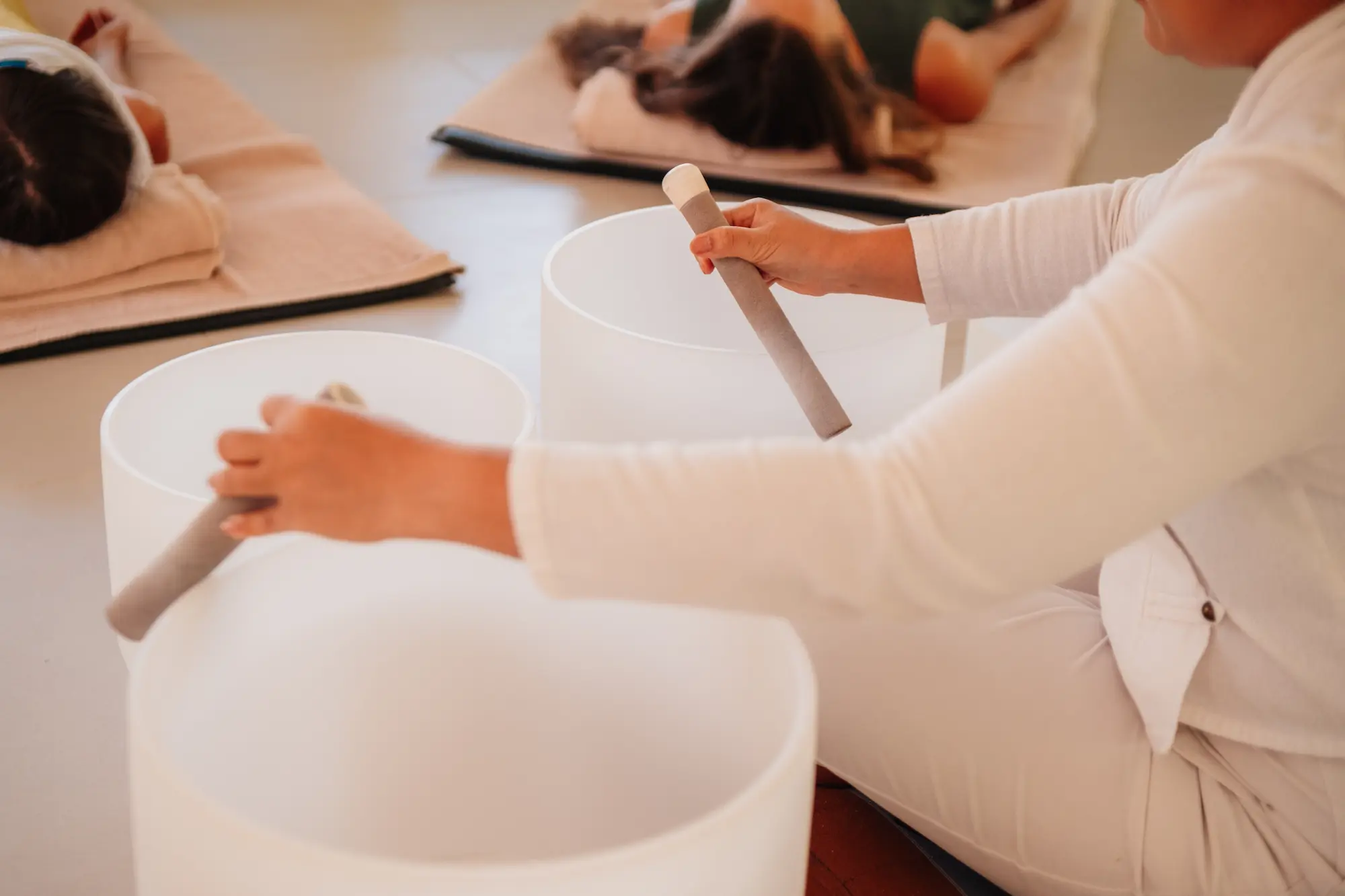
A sound bath is a guided listening experience in which participants are surrounded by sustained sounds, tones, and vibrations produced by musical instruments. Despite the name, no water is involved.
Sessions commonly use:
- Singing bowls: Metal or crystal bowls that produce sustained tones when struck or rubbed.
- Gongs: Large instruments that create layered sounds and changing intensities.
- Chimes: Instruments producing lighter, higher-pitched tones.
- Tuning forks: Instruments that generate specific frequencies, sometimes used in individual wellness sessions.
- Other instruments: Drums, bells, or ambient music, depending on the facilitator.
Sound baths are often described as a form of sound meditation because participants typically rest while directing their attention toward the sounds.
Some sessions also incorporate gentle breathing, guided imagery, or restorative yoga. However, listening to specific frequencies has not been shown to reliably correct health conditions.
What Happens at a Sound Bath?
A typical sound bath lasts approximately 30–75 minutes, although the format varies by practitioner.
1. Arrival and Introduction
The facilitator explains which instruments will be used and what participants can expect. You may be invited to sit or lie on a yoga mat, blanket, or cushion.
A responsible facilitator should explain whether the session involves loud sounds, physical touch, aromatherapy, or additional practices.
2. Gentle Breathing or Guided Relaxation
Some sessions begin with comfortable breathing or mindfulness exercises to help participants settle into the experience.
These exercises should be optional, particularly for people who find breath-focused activities uncomfortable. Gentle breathing differs from intensive Breathwork involving rapid breathing or prolonged breath-holding.
3. Immersive Listening
The facilitator plays instruments in a sequence that may include quiet tones, sustained vibrations, and changes in intensity.
You might focus on the sounds, notice physical sensations, or simply rest. Some participants experience deep relaxation, while others remain alert or find certain instruments distracting.
There is no correct emotional or physical response.
4. Closing and Reflection
The session may end with quieter sounds, silence, or guided reflection. Participants are usually given time to sit up slowly and return to their normal activities.
Some facilitators invite participants to share their experiences, but personal disclosure should always be optional.
What Are the Most Commonly Reported Sound Bath Benefits?
Sound baths may provide an opportunity for rest, focused listening, and relaxation. However, individual experiences vary, and commonly reported benefits should not be confused with established clinical outcomes.
1. Relaxation and Reduced Stress
Resting comfortably while listening to sustained sounds may help redirect attention away from daily responsibilities.
Some participants report feeling calmer afterward. While this is a plausible wellness benefit, it does not establish that sound baths repair or reset the nervous system.
2. Reduced Physical Tension
People sometimes report feeling less physically tense after a session. This may reflect the combined effects of resting, reduced activity, focused attention, and a calming environment.
Feeling less tense does not necessarily mean an underlying muscular or medical condition has been treated.
3. A Meditative State
For people who find silent meditation difficult, sound can provide an external point of focus.
Rather than concentrating exclusively on breathing, participants can direct their attention toward changing tones. This may make sound meditation an approachable introduction to mindfulness.
4. Short-Term Improvements in Mood
Some people describe feeling more peaceful, emotionally settled, or refreshed after a sound bath.
These experiences can be meaningful, even when temporary. However, improved mood after a session is not evidence that sound baths treat depression or other mental-health conditions.
5. Community and Shared Ritual
Group sound baths may provide opportunities for social connection, shared intention, and belonging.
For some people, making time for rest in a supportive environment is as valuable as the sounds themselves.
Do Sound Baths Actually Work? What Does Research Show?
The answer depends on your goals.
If you're seeking a relaxing experience, a sound bath may be worthwhile. If you're looking for a proven treatment for anxiety disorders, depression, PTSD, or chronic pain, the evidence is less convincing.
What Have Studies Found?
An observational study published in the Journal of Evidence-Based Complementary & Alternative Medicine examined participants attending singing-bowl sound meditation sessions.
Researchers reported reductions in self-rated tension, anger, fatigue, and depressed mood following the sessions.
However, the study did not include a randomized control group, making it difficult to determine whether the improvements resulted from the instruments, rest, expectations, or group participation.
The study, Effects of Singing Bowl Sound Meditation on Mood, Tension, and Well-being, offers preliminary insights rather than definitive evidence of therapeutic effectiveness.
Why Is the Evidence Still Limited?
Several factors make sound bath research difficult to interpret:
- Small study populations: Findings may not apply to larger or more diverse groups.
- Different instruments: Studies use varying combinations of singing bowls, gongs, and other instruments.
- Inconsistent session formats: Duration, intensity, and accompanying relaxation practices differ.
- Limited comparison groups: Researchers cannot always separate the effects of sound from those of quiet rest.
- Short follow-up periods: Immediate relaxation does not establish lasting health improvements.
These limitations do not mean sound baths are ineffective as relaxation experiences. They mean stronger research is needed before making specific therapeutic claims.
Can Sound Baths Change Brainwaves or Regulate the Nervous System?
Some Sound Healing practices claim that specific frequencies can reprogram brainwaves, release trauma, or correct nervous-system imbalances.
These claims go beyond what current research has established.
Brain activity can be measured using electroencephalography (EEG), but changes in brainwave patterns do not automatically demonstrate improved health or successful treatment.
Similarly, feeling calm after a session does not prove that the vagus nerve has been activated in a clinically meaningful way.
Sound Bath vs. Sound Healing vs. Music Therapy: What's the Difference?
Although these terms are sometimes used interchangeably, they describe different approaches with distinct purposes and professional requirements.
- Sound Bath: A group relaxation or guided listening experience led by a sound-bath facilitator.
- Sound Healing: An individual or group wellness experience using instruments, tones, or vibrations, led by a sound-healing practitioner.
- Music Therapy: Structured, clinical music-based interventions addressing individualized therapeutic goals, delivered by a credentialed music therapist.
- Sound Meditation: A mindfulness or relaxation practice using sound as a point of focus, guided by a Meditation teacher or sound facilitator.
Sound Healing is a broad wellness term that may include singing bowls, tuning forks, and gongs. Neither Sound Healing nor sound-bath facilitation automatically guarantees standardized healthcare qualifications.
Sound Healing practitioners Jessica Cross and Julie Afsahi share their perspectives on integrating sound into holistic practices, offering additional insight into how practitioners incorporate sound into wellness experiences.
Music Therapy, by contrast, is a distinct healthcare profession. In the United States, the Music Therapist–Board Certified (MT-BC) credential identifies professionals who have met established educational, clinical training, and examination requirements.
The American Music Therapy Association describes Music Therapy as an evidence-based clinical practice involving individualized goals within a therapeutic relationship.
A sound-bath certification is not equivalent to professional Music Therapy training.
Which Related Holistic Modalities May Complement a Sound Bath?
Sound baths are sometimes combined with other holistic practices. Understanding the differences between Reiki, Sound Healing, and Breathwork can help you choose an experience that matches your preferences.
Meditation and Mindfulness
Meditation may involve focused attention, guided imagery, breathing awareness, or observation of thoughts and sensations.
A sound bath can function as a facilitated meditation experience. If you prefer more structured instruction, working with a qualified Meditation teacher may be a better fit.
Gentle Breathwork
Breathwork may be incorporated into the beginning or end of a sound bath to support relaxation.
Gentle breathing should be distinguished from intensive techniques that may produce dizziness, tingling, or emotional distress.
Ask whether breathing exercises are optional, particularly if you have panic symptoms or breathing difficulties.
Reiki and Energy Healing
Some Sound Healing practitioners combine instruments with Reiki or other energy-based practices.
These are separate modalities with different underlying theories and evidence bases.
According to the National Center for Complementary and Integrative Health, Reiki has not been clearly shown to be effective for any health-related purpose, and scientific evidence does not establish the energy field proposed in Reiki theory.
Combining Reiki with a sound bath does not establish additional clinical benefits. Facilitators should explain any energy work or physical touch in advance and obtain consent.
Yoga Nidra and Restorative Yoga
Yoga Nidra involves guided relaxation, while Restorative Yoga uses supported resting positions.
Both may be paired with sound baths to create a longer relaxation experience without physically demanding movement.
Choose an experienced Yoga instructor or Yoga Therapist who can accommodate your mobility, comfort, and health needs.
Who May Enjoy a Sound Bath?
A sound bath may be worth exploring if you:
- Enjoy ambient music, sounds, or guided listening.
- Want a relaxation experience that requires little physical movement.
- Find silent meditation difficult.
- Appreciate group wellness activities and shared rituals.
- Want to create a regular opportunity to rest.
- Are curious about sound-based wellness practices.
You don't need to believe that certain frequencies have special healing properties to enjoy a sound bath. The experience can simply be an opportunity to relax and pay attention to sound.
If you prefer exploring sound-based relaxation in your own space, incorporating simple sound rituals at home can be an accessible way to begin using everyday objects.
Who Should Be Cautious About Sound Baths?
Although sound baths are often described as gentle, some instruments can produce loud or unexpected sounds.
Consider additional precautions if you experience:
- Tinnitus or sound sensitivity: Sustained tones may aggravate symptoms. Ask about sound intensity and seating farther from the instruments.
- Sound-triggered migraines: Discuss whether the facilitator uses gongs or instruments with sudden volume changes.
- Sensory-processing differences: Smaller groups, shorter sessions, or individual experiences may offer greater control over sensory input.
- Trauma-related sound triggers: Choose a trauma-aware facilitator who explains the session, avoids unexpected touch, and allows participants to leave freely.
- Hearing conditions or hearing devices: Ask about instrument placement and consult your hearing healthcare professional if you are unsure whether the sound environment is appropriate.
A well-run sound bath should prioritize comfort, accessibility, and choice rather than expecting everyone to tolerate the same experience.
How Do You Pick the Right Sound Bath or Holistic Practitioner?
Start by identifying your primary goal. Different wellness practices and clinical services address different needs.
- For group relaxation: Consider a Sound Bath with an experienced sound-bath facilitator.
- For personalized sound-based wellness: Explore Sound Healing with a trained sound practitioner.
- For a regular mindfulness routine: Choose Sound Meditation with a qualified Meditation teacher.
- For rest and gentle movement: Consider Restorative Yoga or Yoga Nidra with an experienced Yoga instructor or certified Yoga Therapist.
- For comfortable breathing exercises: Explore gentle Breathwork with an appropriately trained facilitator.
- For combined sound and energy practices: Choose a practitioner trained in both Sound Healing and Reiki.
- For clinical or rehabilitation goals: Consult a credentialed music therapist about Music Therapy.
- For persistent anxiety, depression, or trauma symptoms: Seek evidence-based care from a licensed mental-health professional.
Group sessions may offer community and shared relaxation, while private sessions may provide greater flexibility around sound intensity and positioning.
If you're new to sound baths, a shorter, beginner-friendly session may be a practical starting point.
What Questions Should You Ask Before Booking a Sound Bath?
Professional credentials for sound-bath facilitation are not standardized in the same way as regulated healthcare professions.
A certificate may demonstrate that someone completed a course, but it does not automatically establish clinical competence.
Before booking, ask:
- What instruments do you use, and how loud do they get?
- Can I change positions, move farther away, or leave at any point?
- Do you offer quieter accommodations or smaller sessions?
- What training do you have in sound facilitation and trauma awareness?
- Are Reiki, physical touch, aromatherapy, or Breathwork included?
- What should I do if I feel uncomfortable or overwhelmed?
- Do you describe your services as relaxation or clinical treatment?
Look for practitioners who communicate clearly, respect individual boundaries, and explain the limitations of their services.
What Are the Red Flags When Choosing a Sound-Healing Practitioner?
Be cautious of facilitators who:
- Claim specific frequencies can cure illnesses or reprogram brainwaves.
- Promise to remove trauma stored in the body.
- Describe sound baths as a way to detoxify cells or organs.
- Claim to treat depression, PTSD, or chronic illnesses without appropriate clinical qualifications.
- Present higher vibrations as guarantees of improved health.
- Insist that discomfort or distress is necessary for results.
- Perform physical touch or energy work without consent.
- Discourage medical or mental-health treatment.
Responsible facilitators can explain the potential relaxation benefits of sound baths without making unsupported medical claims.
How Should You Prepare for Your First Sound Bath?
A little preparation can make your first experience more comfortable.
- Choose a suitable setting: Review the session duration, group size, instruments, and sound intensity before booking.
- Wear comfortable clothing: Bring a yoga mat, pillow, blanket, or eye mask if recommended by the facilitator.
- Remain open to different experiences: You may feel relaxed, notice wandering thoughts, or simply enjoy the sounds.
- Give yourself permission to adjust: Change positions, keep your eyes open, sit farther away, or step outside if necessary.
- Reflect afterward: Consider whether the experience helped you feel rested, comfortable, or more present.
There is no requirement to experience an emotional release or unusual physical sensation. The purpose of exploring a wellness practice is to discover what works for you.
The Heallist Perspective: Relaxation Doesn't Need Extraordinary Claims
At Heallist, we believe the value of a wellness practice should be understood through what it realistically offers.
A sound bath doesn't need to promise cellular detoxification, trauma release, or dramatic brainwave changes to be meaningful.
For some people, the benefit may be having an uninterrupted hour to rest. For others, it may be discovering a form of meditation that feels more approachable than sitting in silence.
The relationship between sound and well-being extends beyond listening. Actively engaging with music can also offer opportunities for relaxation, creative expression, and mindful movement.
As Gary Marks, Rehabilitative Piano Coach, shares:
“Music is therapy for the mind and soul. Learning to play piano in calm and relaxing ways is physical therapy for hurting hands and arms.”
— Gary Marks
Rehabilitative Piano Coach
Group sessions may also offer opportunities to connect with others through shared wellness experiences.
Innovative approaches to sound-based wellness are also creating new opportunities for intentional listening. Our partner spotlight on Listening to Smile explores new approaches to sound therapy within the broader wellness landscape.
Within the Heallist Network, clients can explore different holistic modalities, compare practitioner backgrounds, and choose experiences aligned with their individual needs.
What matters most is whether the practitioner has appropriate training, the session feels safe and accessible, and the expectations are realistic.
Final Thoughts
Sound baths may offer a meaningful opportunity for relaxation, focused listening, and personal reflection. Some participants report feeling calmer, less tense, or more emotionally settled afterward.
However, current evidence does not establish sound baths as treatments for anxiety disorders, depression, PTSD, or other medical conditions.
Sound Healing, Meditation, Restorative Yoga, and Music Therapy have different purposes and professional requirements. Understanding these distinctions can help you make informed wellness decisions.
If you're interested in attending a sound bath, identify your goals, ask about instruments and sound levels, and choose a facilitator who prioritizes safety and informed consent.
A sound bath can be a valuable wellness ritual without needing to be a proven medical therapy.
FAQs
Do sound baths really work?
Sound baths may help some people feel relaxed, less tense, or emotionally settled immediately after a session. However, research remains limited, and there is insufficient evidence that sound baths treat specific medical or mental-health conditions.
Can a sound bath help with anxiety?
Some participants report reduced feelings of tension or anxiety after a sound bath. However, temporary relaxation should not be confused with treatment for an anxiety disorder. Persistent or severe anxiety deserves professional assessment.
What happens at a sound bath?
Participants typically sit or lie comfortably while a facilitator plays singing bowls, gongs, chimes, or other instruments. Sessions may include guided breathing, meditation, and quiet reflection.
Are sound baths safe for everyone?
Not necessarily. People with tinnitus, sound sensitivity, sound-triggered migraines, hearing conditions, or trauma-related sound triggers may require modifications or prefer another relaxation practice.
What is the difference between Sound Healing and Music Therapy?
Sound Healing generally describes wellness experiences using instruments or tones. Music Therapy is a clinical profession involving credentialed practitioners who use music-based interventions to address individualized therapeutic goals.
Interested in Finding a Sound Bath or Relaxation Practice?
Explore Sound Healing, guided Meditation, gentle Breathwork, and Restorative Yoga with practitioners who understand your individual wellness preferences.
→ Find Sound Healing and Meditation Practitioners on Heallist

