Expert Q&A: The mindset root of emotional eating, with Leah Van Dolder
Reviewed by Yuli Ziv, Founder & CEO of Heallist
The following interview is a transcript excerpt from The Heallist Podcast episode. Listen to the full audio version or watch the video and subscribe to get notified of new episodes.
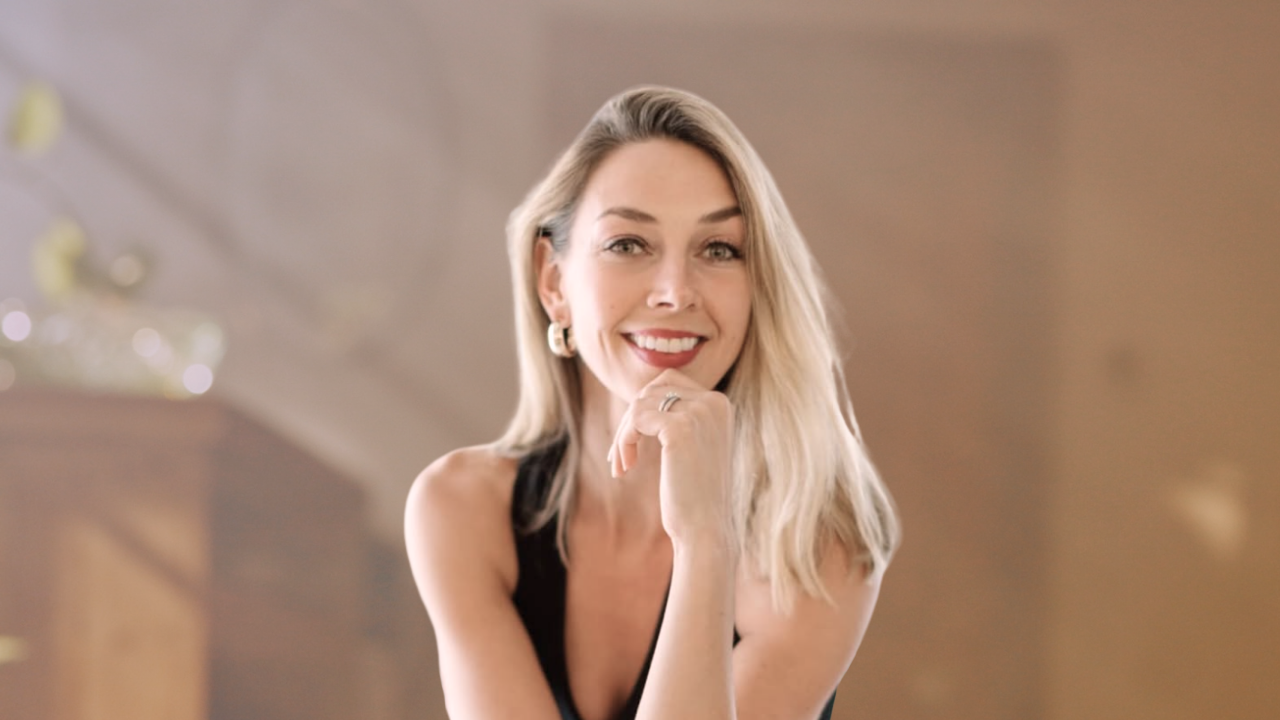
We’re joined by Leah Van Dolder, a registered dietitian and mindset coach who works with women on the behavioral and psychological patterns underneath their relationship with food—not just the food itself. Together, we explore what healing a relationship with food can actually look like in practice, beyond meal plans, restriction, or willpower.
Drawing from her work with clients, Leah shares how family dynamics, stress, achievement-oriented thinking, and cultural messaging can shape eating habits and body image over time. The conversation explores the difference between reactive and responsive eating, why consistency often matters more than perfection, and how mindset shifts may support more sustainable and compassionate approaches to nutrition and self-care.
Food Beliefs We Inherit
Leah Van Dolder: I recognize how powerful a woman's relationship with food is and especially her leading by example. And I recognize that I gained the beautiful gift of seeing a woman fully embodied in a healthy relationship with herself and her food by my mother. And I realized as I was working in, because my very first clinical job was in a weight loss clinic. And what I loved about it was the human connection and having these deep, intimate conversations with women around food, because I said, food is this gateway into talking about everything else. I quickly realized how fortunate I was and how much of a blessing it was to grow up in a home where my mother had a very healthy, nourishing relationship with food. And I realized that the more that I talked to women and how warped their perceptions were around food, how they grew up in a home where their mother was continuously on Weight Watchers, ideal protein, talking about the next wedding that she's got to go to and lose 10 pounds to rock her dress, or talking about her body picking herself apart in the mirror. And I was, “whoa”, what a gift it has been to me to have a role model and somebody who passes down those habits to me just naturally. I learned those as a kid, and I see how much of a privilege that was and how powerful it is for women to create a nourishing relationship with foods so they can pass it down to their children because that's that's generational health. There's such an impact there.
Diet Culture Rules And Self-Worth
Leah Van Dolder: The first one that comes to mind is how food, like the good food, bad food, certain foods are put on a pedestal, “oh, well, I shouldn't have those”. I can't have those. That's gonna go straight to my hips. You know, we put these foods on a pedestal. And it's interesting too in psychology. The things that we can't have or we shouldn't have, of course, we want them more. It's like telling your child, you can't play with that toy, but you can play with all these other 50 toys. The one that they want to play with is the one that they can't have. So that is a fascinating dynamic with food and how we assign importance, or have more willpower or discipline because I can resist the chocolate cake that's brought into the staff room. The good food, bad food thing, the pedestal.
I think numbers, our body shape and size, and how that subtly works into our self-worth. Many women that I work with, they say they recognize, or I recognize that, I heard things from my mom talk about getting smaller and skinnier. A lot of their self-worth and capabilities and belief in self are tied into a number.
When Hard Work Isn’t Enough
Leah Van Dolder: Accepting and realizing that, not feeling guilty about reaching out and recognizing that they can't do it alone or they don't want to. Because they say, I feel really lonely in this. I don't want to do it on my own. Plus, I don't have the time or the mental bandwidth to figure it out. And there's this low grade annoyance because they start to realize that the cost of staying the same is way more expensive than investing in the solution and getting the right support. That's the moment. I usually ask them, I said, so this might sound like a super weird question, but how much worse does this have to get in order to do something about it? They're like, nope, it cannot get any worse because I don't recognize myself in a mirror. I don't feel my exterior matches who I am. And I don't want it to get any worse. I don't want it to.
Yuli 12:44
What do you see as the biggest mind shift that happens? I know it's not as easy or as simple, but you are talking about the mindset being one of the key components of that journey.
Leah Van Dolder: Recognizing that it's less about food. Realizing that it's less about food and it's more about organization and implementation and repetition of this stuff and incorporating balance into their everyday life because I think one of the most amazing things that I see well, a couple things are coming to mind. The one is recognizing what they're like, I didn't realize that it could be this simple. Where when women come into my world, I get a really good idea. I have got a three-step proven process for this where we reveal what's not working, we reveal the habits, the thought processes, the stories, the mindsets that are keeping them stuck. We refine all of it and then we recalibrate her to a new level so that she elevates her baseline, she elevates her default habits. And one of the things too is recognizing women are why have I been making this so much harder than it needs to be? Here I am trying to change everything at once or do a plan that is so different from what I'm used to. And where our brain comes into that and our brain doesn't love that much change at one time. We can all follow a meal plan for three days, but come Thursday night, you are mentally tapped, life is lifting, and you're like, screw this, I'm just going for the easy, let's press the easy button. This beautiful shift from I don't have to try so flippantly hard and white knuckle it through this journey. I can start with three things. And oftentimes for women, it's making a decision ahead of time. Less choice equals more freedom in your brain. Less decisions in the moment when you are stressed, tired, and mentally tapped, the better when it comes to nutrition. Healthy eating doesn't happen by accident, it happens on purpose. Oftentimes, women say, they suck at consistent execution. I say, tell me what consistency means to you. Consistency is not synonymous with perfection, they're very different. I think the most amazing thing to me is seeing women's brains light up, “Oh my gosh, I've been going at this the wrong way.” This can actually be fun and feel light and energizing versus a total slog and actually enjoying food. And getting away from tracking macros, you're going to confess, forgive me, father, I have sinned. I ate three crackers and didn't track them today. So it's creating more enjoyment with food in the process of becoming healthy, happy, and really the strongest version of you.
Making Healthy Food Enjoyable
Leah Van Dolder: I'm thinking about a client who said to me, she's like, “I used to think that I had to suffer through eating fruits and vegetables just because they're good for me.” It felt forced. And she said, the opposite too, around the things like french fries or chips or cakes, whatever. She said, “I used to really love those because they taste so good and they're just so yummy.” So when hearing her own thought process and her own belief around food, now we get to create a new confirmation bias in your brain that sounds, kale can be enjoyable. We just get to play and flirt around with what you add to it, how you cook it, and whatever it may be. That's the fun part about allowing yourself to play in the kitchen.
So I love utilizing those pre cut slaws or the pre-wash, the spinach or the bag salad mixes, and adding little pieces of color or different textures. Like a carrot on top or some zucchini, or put some roasted lentils or chickpeas. It's that element of visual appeal and just allowing yourself to try.
When you're triggered, when you're tired, when you're stressed, who's the version of you who shows up in those circumstances? The default or the reactive version of you, who you know defaults to food, defaults to ice cream, and sits on the couch with this story of deserving it. Being able to just hold on a second here: Why am I walking to the freezer? Why is the pantry calling my name? What is my body actually asking of me? What type of emotion am I trying to fulfill with food? So it's that pathway of self-awareness, self-discovery, honoring the body in the moment and recognizing that wow. Food could fill an emotional comfort. Recognizing that you can in a moment take a pause and take a different pathway. With repeating that time again, the neuroplasticity, you're creating this new pathway in your brain. Often the food is just avoidance. We're just given a band-aid solution versus actually giving ourselves the space and the courage to really feel the discomfort of our feelings. So it is the most uncomfortable, fulfilling, wild, transformative journey. I love the work that I do, because women just come alive. And see that these skills of becoming responsive versus reactive and really becoming mindful and thoughtful about our next choice. When women start to see the benefit of that, they see that the behavior change leads to more presence, more kindness, more compassion. It makes the growing pains and the stretch marks of growth so worth it.
GLP-1 Shortcuts And Lasting Change
Leah Van Dolder: I'm seeing that medications, there's a time and a place. And there are some women that it's a great fit for and some that it's not. And going back to choice and discernment. At the end of the day, it's your choice, your body, and feeling that something is a good fit for you, that absolutely takes discernment. With working in weight loss clinics for over a decade, there were many women that were taking GLP ones and using these medications. One thing that I'll say about this is what happens when you take them away? When you are choosing a medication or whatever else, whether it's a detox or another shortcut, when it's done, or when you decide to stop, then what happens? So I really like the thought process and in any conversation with women, it's your body and it's your choice. Recognizing any of these modalities, it could be a great adjunct to what you're doing. The behavior, the psychology, and the behavior change that has to be included in the program in order to get the lasting change. So what I see often is how women take GLP and thinking what mindset this is gonna give me fast and furious results. And it happens, but then they come off of it. You've just taken away this hormone. So it makes a lot of sense that appetite's gonna come back, we're gonna come back if you haven't also looked at the behavior change, your relationship with food, everything that we've talked about here. So I have also seen women that are doing the deep transformative behavior change using a GLP one or medication to support them in their journey. It really comes back to that element of choice, practicing discernment and recognizing “how do I want this to end? Do I want lasting results or am I cool to just go fast and furious, have temporary results, or do I want lasting results and also be accepting and okay with the fact that it's gonna take me longer to get there.” So, what do you want? Fast and temporary or steady, sustainable, and lasting?”
Listen to the full episode on Apple Podcasts, Spotify or Youtube