Meet the Next Generation of Wellness Experts: Integrative Practitioners Bridging Science and Spirit
Reviewed by Yuli Ziv, Founder & CEO of Heallist
Disclaimer: This article is for education, not medical advice. Talk to a qualified healthcare professional before making health decisions. Heallist doesn't provide medical services or verify practitioners.
Integrative wellness practitioners take a whole-person approach, considering how physical health, lifestyle, stress, emotional well-being, environment, and other factors may interact. Depending on their credentials and scope, they may combine conventional or science-informed approaches with complementary practices such as Nutrition Coaching, Acupuncture, Ayurveda, Herbalism, or mind-body techniques.
“Integrative” does not automatically mean that every modality a practitioner uses has the same level of scientific evidence. Look at each practitioner's qualifications, scope of practice, methods, and health claims individually—and use holistic care alongside appropriate medical or mental health care when needed.
Wellness is changing, and many people can feel it. The old model of care often asked you to choose sides: science or spirituality, logic or intuition, evidence or embodiment. Today, a new generation of wellness practitioners is quietly dissolving that divide. These integrative experts are blending modern science with ancient wisdom, meeting clients not just at the level of symptoms, but at the level of the whole human experience. For clients and seekers, this shift can feel deeply relieving. You no longer have to fragment yourself to receive care. Your physical health, emotional world, mental patterns, and inner life are all welcome in the same space.
This is the rise of integrative practitioners—and why their work resonates so strongly in this moment.
Why the Wellness Landscape Is Evolving?
Many people arrive at integrative care after realizing that one-dimensional solutions don’t fully address what they’re experiencing.
You might have:
- Lab results that look “normal” but don’t match how you feel
- Chronic stress that shows up physically
- Emotional patterns that repeat despite lifestyle changes
- A sense that healing needs to include meaning, not just management
Modern science has given us extraordinary tools for understanding the body. At the same time, ancient healing systems have long understood the interconnectedness of body, mind, and spirit. Integrative practitioners don’t see these approaches as competing—they see them as complementary.
This evolution reflects a deeper truth: healing happens most sustainably when all layers of a person are acknowledged.
Who Are Integrative Wellness Practitioners?
Integrative practitioners are professionals who work across disciplines, drawing from both evidence-based knowledge and holistic frameworks. Their training paths are often diverse and layered, combining clinical understanding with somatic, emotional, or energetic awareness. Rather than following rigid protocols, these practitioners learn to listen—to the body, to patterns, and to what’s unfolding beneath the surface.
They often ask questions like:
- How is your nervous system responding to your life right now?
- What patterns keep returning, and when did they begin?
- How do stress, digestion, sleep, and emotions interact for you?
- What does your body need to feel safe enough to heal?
Their role is not to override your intuition, but to help you reconnect with it.
Integrative health is more than simply combining several wellness modalities. The National Center for Complementary and Integrative Health describes integrative health as bringing conventional and complementary approaches together in a coordinated way, with an emphasis on caring for the whole person rather than focusing on a single organ system or concern. NCCIH's whole-person health framework also considers interconnected biological, behavioral, social, and environmental domains.
This means that truly integrative care should involve thoughtful coordination—not simply adding more treatments.
Bridging Science and Spirit in Practice
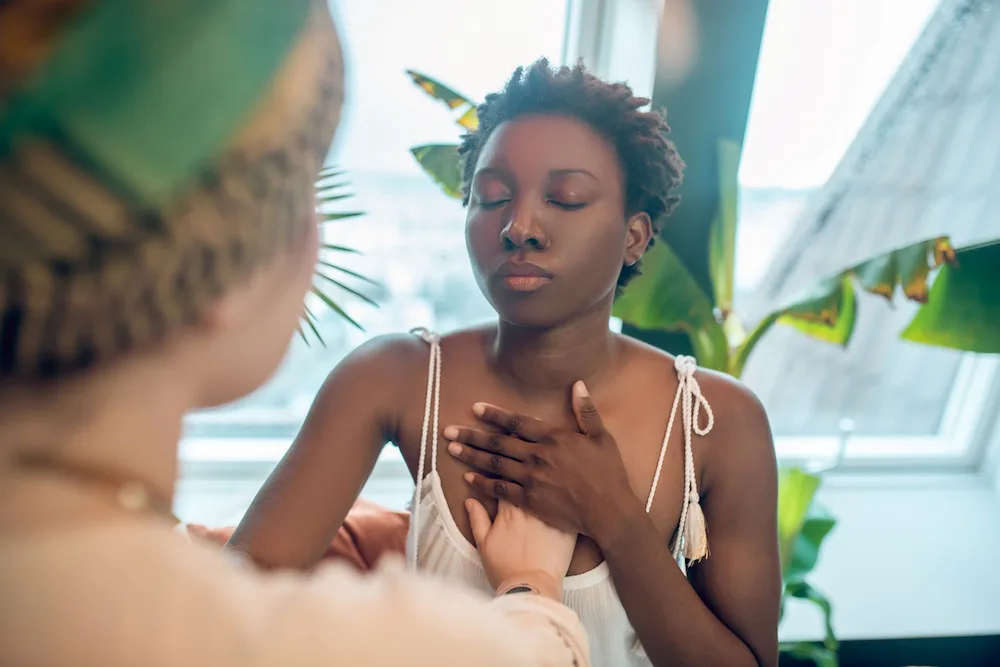
What does it actually look like when science and spirituality meet in a session? It often begins with grounding in the physical body. Practitioners may draw on anatomy, physiology, and nervous system science to understand how stress, trauma, or lifestyle factors affect your health. From there, they integrate practices that support regulation, awareness, and release.
This might include:
- Understanding stress responses and hormonal patterns
- Working with breath, posture, and movement to calm the nervous system
- Using body-based techniques to release stored tension
- Supporting digestion, sleep, and energy through lifestyle guidance
- Holding space for emotional processing and meaning-making
Spirituality, in this context, isn’t about belief systems. It’s about connection—connection to self, to purpose, and to the intelligence of the body itself.
The Role of the Nervous System in Integrative Healing
One of the biggest contributions modern science has made to holistic care is a deeper understanding of the nervous system.
Integrative practitioners recognize that healing cannot happen when the body feels unsafe. Chronic stress, overstimulation, and unresolved emotional experiences keep the nervous system in a constant state of alert. By helping clients regulate their nervous systems, practitioners create the conditions for healing to unfold naturally.
This is why many integrative sessions feel calming, grounding, or unexpectedly emotional. When the body relaxes, it finally has space to process what it has been holding.
Why Clients Are Drawn to This Approach?
Clients often describe integrative care as the first time they felt truly seen. Instead of being rushed or reduced to symptoms, they experience:
- Being listened to without judgment
- Care that adapts to their changing needs
- A sense of partnership rather than instruction
- Permission to move at their own pace
- Healing that feels aligned rather than forced
This approach honors complexity. It acknowledges that healing isn’t linear and that progress can look like rest, clarity, or release—not just measurable outcomes. For many seekers, this is what finally allows trust to return to the healing process.
Importantly, integrative practitioners sometimes or often operate as part of a broader care team, collaborating with other wellness professionals and, when appropriate, traditional medical doctors. They understand when specialized care is needed and will often refer clients to physicians, therapists, or diagnostic specialists to ensure nothing is overlooked. This collaborative approach allows clients to receive holistic support while still benefiting from medical expertise when necessary.
Common Modalities Used by Integrative Practitioners
While every practitioner’s approach is unique, many integrative experts work with a blend of modalities that support both science-informed care and embodied awareness.
These may include:
- Acupuncture or Acupressure to regulate the nervous system
- Ayurveda to restore balance through daily rhythms and digestion
- Body alignment to help maintain body posture and alleviate pain
- Herbalism to support the body gently over time
- Chiropractic to access physical release points
- Nutrition Coaching grounded in both biology and lived experience
What unites these modalities is not technique alone, but intention: supporting the body’s innate ability to heal when given the right conditions.
Healing as a Collaborative Process
Integrative practitioners do not position themselves as authorities over your body. Instead, they act as guides and collaborators. You are encouraged to notice sensations, emotions, and insights that arise. Your lived experience becomes part of the healing process, not something to be corrected or ignored. This collaboration builds self-trust. Over time, many clients find they rely less on external validation and more on their own internal cues. Healing becomes something you participate in, not something that happens to you.
What to Expect When Working With an Integrative Practitioner?
Sessions with integrative practitioners often feel slower and more spacious than conventional appointments.
You may notice:
- More time for conversation and reflection
- Attention to both physical and emotional patterns
- Gentle pacing rather than urgency
- Practices that continue between sessions
- A focus on integration, not quick fixes
Progress is measured not just by symptom change, but by how you feel in your body and in your life.
Why This Matters Right Now?
As burnout, chronic stress, and emotional fatigue become more common, people are seeking care that feels human, grounded, and whole.
The next generation of wellness experts is responding not with louder solutions, but with deeper ones. By bridging science and spirit, they offer care that meets the complexity of modern life without asking clients to fragment themselves.
This is not a trend. It’s a return to a more complete understanding of health.
The Heallist Perspective: Integration Should Mean More Context, Not Bigger Claims
At Heallist, we see the future of holistic wellness less as a choice between science and spirit and more as an opportunity for better context.
A client may care about lab results and lifestyle, but also stress, relationships, purpose, cultural traditions, spirituality, and how they actually feel day to day. Those dimensions do not need to compete.
At the same time, bringing different perspectives together does not make every health claim equally supported.
A practitioner can honor traditional wisdom without presenting tradition as clinical proof. They can value intuition without using it to diagnose disease. They can incorporate complementary practices while recognizing when medical or mental health expertise is needed.
This is where integrative care becomes most useful: not when it promises to explain everything, but when it helps clients see more of the picture while staying clear about evidence, scope, and limits.
For clients, the question is therefore not simply, “Is this practitioner scientific or holistic?”
A better question is:
“Does this practitioner understand the whole person while being transparent about what they know, what they offer, and where their expertise ends?”
Final Thoughts
Integrative practitioners represent a shift toward healing that honors both knowledge and intuition, structure and softness.
If you’re exploring your own wellness journey and feel drawn to care that considers your body, emotions, and inner life together, you may resonate with this approach.
If and when it feels right, you can gently explore the Heallist Network using the healers widget to discover integrative practitioners whose work aligns with where you are—without pressure, timelines, or expectations. Sometimes simply seeing what’s available is the first step toward feeling supported.
FAQs
What makes an integrative practitioner different from a traditional provider?
Integrative practitioners look at the whole person rather than isolated symptoms. They blend scientific understanding with holistic practices to support physical, emotional, and nervous system health together.
Do I need to be spiritual to work with an integrative practitioner?
No. Spirituality in integrative care is about awareness and connection, not belief. Practitioners meet clients where they are and adapt their approach accordingly.
How long does integrative healing usually take?
Healing timelines vary. Integrative care focuses on sustainable change rather than quick fixes, so progress often unfolds gradually and respectfully.
How do I know if a practitioner is right for me?
Notice how you feel when reading about their approach. A sense of safety, resonance, or curiosity is often a good indicator. Trust your intuition and take your time choosing support.
DisclaimerThis content is for educational and informational purposes only and is not intended as medical advice, diagnosis, or treatment. Always consult a qualified healthcare professional before making decisions related to your health, medical testing, or treatment. Heallist does not provide medical services and does not endorse specific tests, protocols, or outcomes.
Ready to explore integrative practitioners?
Browse the Heallist Network to see a curated selection of integrative wellness experts, including those blending science, somatic care, and energetic practices. Take your time and discover practitioners whose approach feels aligned with where you are in your journey.

