Expert Q&A: The digital loneliness epidemic with Anthony Silard
Reviewed by Jessica Ruth Shepard, Holistic Health Coach & Bodywork Practitioner
The following interview is a transcript excerpt from The Heallist Podcast episode. Listen to the full audio version below and subscribe to get notified of new episodes.
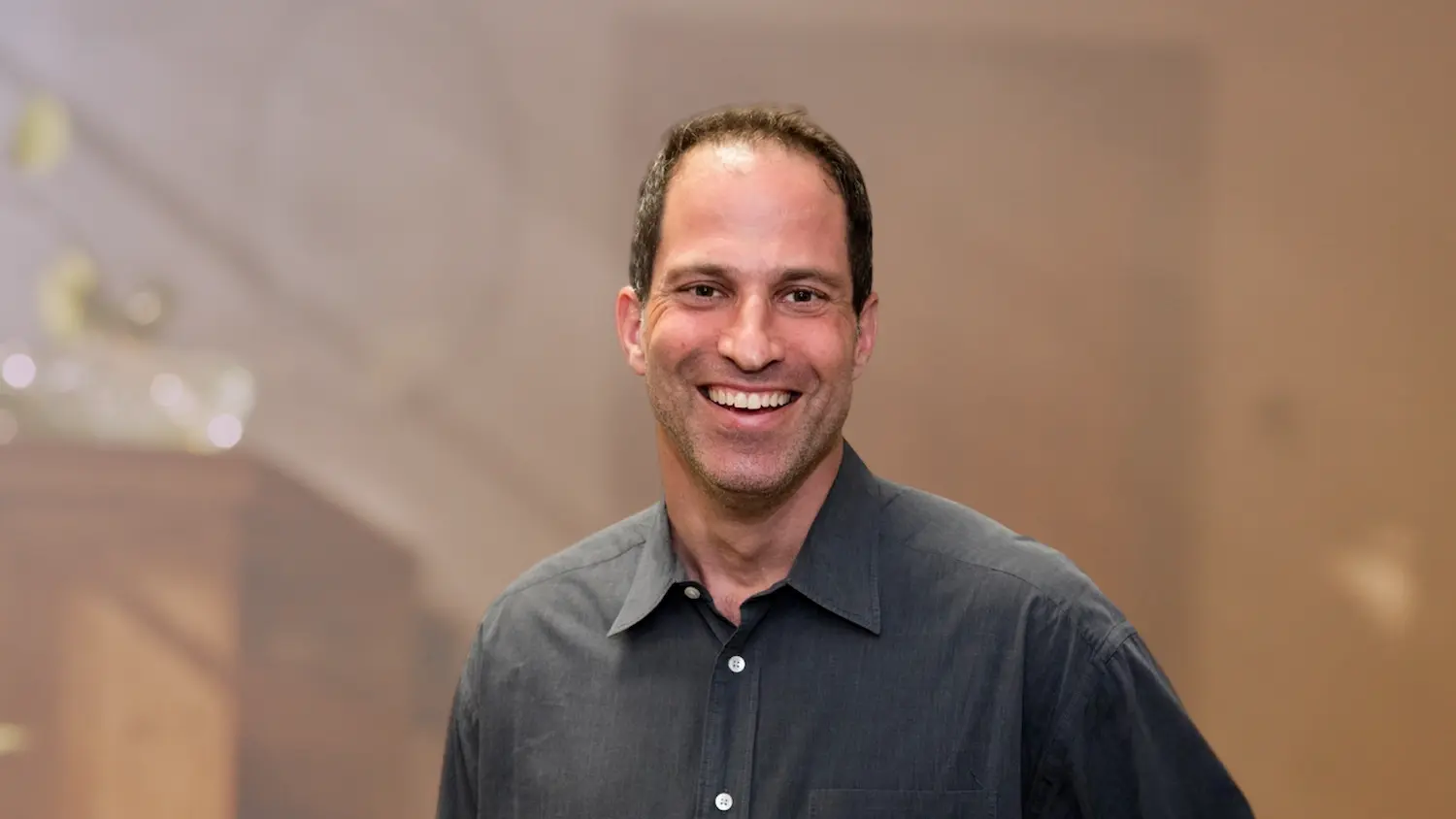
In this episode, we explore one of the defining health challenges of our time: loneliness. Anthony Silard, professor of leadership and organizational psychology at Luiss Business School and director of its Center for Sustainable Leadership, is one of the world's leading researchers on loneliness in organizations. Anthony brings a research-backed perspective on how social disconnection affects our well-being and why the rise of digital technology has become such an important part of the conversation.
Drawing from his research, leadership coaching experience, and work as the author of Screened In and Love and Suffering, Anthony explores the links between loneliness, physical health, mental health, and modern technology. We discuss how smartphones and social media may influence our sense of connection, why loneliness increased during and after the pandemic, and what practical steps individuals can take to foster more meaningful relationships in their daily lives. Listeners will gain a deeper understanding of the difference between being connected online and feeling genuinely connected to others.
Loneliness As A Serious Health Risk
Anthony Silard: I feel like it's one of those conditions that doesn't have a very defined health risk. So it's often deprioritized. I think we underestimate it because we don't tend to think about our socialization as a health concern, which is a huge mistake. A recent meta-analysis discovered that loneliness is the equivalent of smoking 15 cigarettes a day for your health. People who are lonely actually die younger — there's a higher mortality rate. There's also physical health conditions associated with loneliness, from breakdown of the immune endocrine systems to more frequent heart attacks. If you cut yourself, the wound actually takes longer to heal if you're lonely. Then also psychological health — people who are lonely are more likely to become anxious and depressed, more easily feel burnout, and their self-esteem plummets. So we really need each other, and when we don't learn behaviors to enrich the relationships in our lives, then we become sick, physically and psychologically.
That was the primary finding of the longest-standing longitudinal study of adults we know of in history, Robert Waldinger at Harvard, their study of adult development, starting in the mid-1930s and going all the way until today. What they found is that the seniors who are the healthiest and happiest are the ones who had the closest relationships with others. One of the only things psychologists almost all agree on is that close relationships are as close as you get to a panacea for long-term well-being. People who have close relationships are happier, and they also tend to be healthier because, for example, they have people that check in on them — that ensure they go to doctor's appointments and engage in healthy behaviors, because other people tend to call us out when we stop taking care of ourselves.
Anthony Silard: This is the popular belief that never in human history have we been so connected with so many people as we are today. Let's take a look at what the research actually has found. The research has found that actually we've never been this depressed, we've never been this anxious — there's a number of studies that show that the longer you spend on your phone, the more depressed you become, the lonelier you become. There's what's been identified as a displacement effect: the more time you're on your screens, it's kind of like taking a bowling ball and dropping it into a bathtub full of water. All the water that comes out of the bathtub, that's the time with people in real life that you no longer spend with them, because instead you're interacting with them online and on your screens. A good friend of mine doing an MBA in Barcelona told me that in the two years of his MBA, he never once actually made or received a phone call. Everything was by texting. So really we're seeing this displacement effect, that screen-mediated communication is replacing face-to-face communication.
Why Texting Turns Colder Fast
Anthony Silard: There's been many studies on dehumanization, Nick Epley at University of Chicago and Juliana Schroeder at Berkeley found that if you're reading a message from someone with a different political persuasion, you're more likely to dehumanize them, whereas if you hear or see that same message, the dehumanization is much less. There's also a negative effective bias of electronic communication, Chris Byron's research at Georgia State, where a message intending to be positive is usually received as neutral, and one intending to be neutral is usually received as negative. So there's a downward pull on our relationships when we communicate through screens rather than in person.
And what about social media? A University of Cambridge study found that whenever a politician uploads a message that's negative and disparaging the outgroup versus one that's positive or neutral, the negative messages are forwarded and liked at 2.7 times the rate. This reflects the business model of these technology companies — to keep us on our screens for as much time as possible. That's what my book Screened In, The Art of Living Free in the Digital Age, goes through — because we're allowing ourselves to become the product. What we share is the product, and these companies accentuate the worst parts of ourselves — taking "if it bleeds, it leads" and putting it on steroids.
Anthony Silard: I believe in fundamental human goodness and decency and kindness. Our phones are just a communication modality, and when people are in person, they tend to be kind, they tend to usually be decent human beings. I interviewed Juliana Schroeder and also Nick Epley, who do research on talking to strangers — they did this in Chicago and in London on the Tube. Someone's about to get on the subway or train, and you ask them, would you rather talk with someone you don't know, or would you rather ride alone? They'll say, I'd rather ride alone, I'd enjoy it more, I'll be on my phone, I'm fine. Then they offer a gift card if you go and talk with someone you don't know, and do a survey afterward on how it went. And almost everyone who participates says, I was totally surprised, I enjoyed it much more than I thought I would, I learned much more than I thought I would. When asked why they don't do that more, it's really this fear of rejection, this social anxiety. But what they found is that almost no one gets rejected, because most people tend to be relatively kind and decent human beings.
So if we want to shift more into that positive interpersonal space, it's very simple: just use your phone as a phone. Call people. Go and visit people, spend time with people. Other research has found that it's the human voice which is really the purveyor of human connection. A lot of us have this idea that a video conference is going to be more connected because we see each other, it's not true. There's actually no difference; video has no additive effect over the voice in terms of bringing people closer. There are exceptions — for grandparents, grandchildren are basically like crack. But after the first few minutes, that wears off, and again it's really the voice that's connecting people. We just have to use technology differently.
Building A Screen Use Vision
Anthony Silard: The real challenge for today is not about using your phone or not using your phone. It's about self-regulation. It's about coming up with your vision for how often you want to use your phone, and then trying to realize that from day to day. When you're 80 years old looking back at your life, do you want to say, hey, Anthony was a great email replier? That's not what I want to be thinking when I'm 80. I want to think I developed really close relationships with people I love and care about, and I had the courage to talk with people I didn't know and build new friendships. So it's a question for each of your listeners to develop your own vision, your own values around how often you want to use your screens, and then find ways to stick to that vision.
This visual has clicked for a lot of the people I coach: the next time you're on your screen, imagine that it's you against thousands of programmers, predominantly men, whose bonuses are tied to keeping you on that screen as long as possible. Grab them short and keep them long, that's how they get their raises, that's the business model. You've got to have some really innovative strategies to stick to that vision, because at the moment, it's like you're in the middle of the casino, and getting out is going to be really difficult.
Based on hundreds of interviews, that's how the strategies I included in Screened In came about. One of them: identify your poison of choice. Which are the apps that you get addicted to? Maybe it's WhatsApp, a gambling app, or Facebook or Instagram. There's a quote I love by Spinoza, emotion which ceases to be suffering when we form a clear and precise picture of it. Form that clear picture of why you're going to these apps. When you do that, what you'll find is that there really is no digital addiction. You're addicted to the same things you used to be addicted to in your analog life — recognition, feeling worthy, feeling competent, feeling safe, experiencing variety.
Take that poison of choice and put it several screens away — I call it the heart of darkness in Screened In: the outer station, the middle station, the inner station. Then ask yourself how many times a day you're going to check those apps. We touch our phones on average over 2,500 times each day. Project yourself to you with white hair at 80, and ask how many times a day you should be checking those apps. This is how you move your life in the direction of your desired life.
A few other ideas are simple but hard to do. Turn off notifications — no dings, like telling a pigeon it needs to peck more to get the pellet. And here's one that's a bit radical, but those who've followed it thank me the most: put your phone in grayscale. These technology companies use colors on your phone to manipulate you — research shows that men shown a photo of a woman in a blue dress versus a red dress want to spend much more and are much more eager to take out the woman in the red dress. When you put your phone in grayscale, it becomes very boring very fast, and you start focusing on the real world in Technicolor instead. With accessibility options, you can flick two fingers and switch back to color when you're driving, or want to see a photo of your kids.
Loneliness For Solo Practitioners
Anthony Silard: We talked earlier about this belief that never in human history have we been so connected with so many people. What's actually happening is that never in human history have we been in contact with so many people and connected with so few. And that's why we become so lonely — it's not just being in contact with someone, it's having deeper conversations. Recent studies have borne this out, that when we have more meaningful conversations, that really reduces loneliness. What tends to happen is that we're having these shallower conversations, and we don't feel we're really being ourselves with others. We don't feel witnessed. And I think feeling witnessed is one of the number one ways to reduce loneliness — feeling like there are other people going through this life with you, and they see you and understand you.
If you're working in a healing profession on your own, there's a few positive notes here. Research on social support has found that giving social support to others actually leads much more to long-term happiness than receiving it. So each of you is a healer, you're helping others. Recognizing that if you're working in this profession and helping others heal — well, what's led you down this path? Perhaps there's been some trauma in your own life that's made you want to help others. I can say in my case, that's 100% true. Through your healing profession, you're able to also heal some of this trauma. And one of the most important ways to heal trauma is through social connection — sharing it with others, having others you can share where you are on your journey with, and getting feedback from them.
So one thing to think about is that it's not being alone that causes you to feel lonely. Being alone, or what we could call aloneness, is objective isolation. But loneliness is subjective isolation. It's not being alone, it's feeling alone. We become lonely because when we're alone, we associate it with something negative, and so we have this negative, distressing emotion. But there's also a positive, strengthening emotion associated with being alone, and that's what we call solitude. Just as one person's trash is another person's treasure, being alone for some people is that trash, and for other people it's that treasure. When we're spending sufficient time with others that is meaningful, and also spending sufficient time alone so we can process how we interact with others, that's really the exit strategy from loneliness.
Check out Anthony’s free books: The Myth of Happiness, How Your Definition of Happiness Creates Your Unhappiness, and The Myth of Friendship, How Your Misunderstandings About Friendship Keep You Lonely.
Two short reads that might just change how you think about connection, for good. Because at the end of the day, no app, algorithm, or highlight reel can replace the feeling of being truly seen by another person. The most radical thing you can do in a hyper-connected world might just be picking up the phone and calling someone you love. Or better yet, showing up in person, putting your screen away, and simply being there. Loneliness may be everywhere, but so is the antidote — and it starts with one honest conversation at a time.
Looking for a practitioner to guide you through healthy habits and deepen your connections?
Explore the Heallist network to find holistic health professionals who can support you on your journey toward genuine, lasting connection.
Find your network connections here

