Aura Colors and Their Meanings: A Complete Guide to What Each Color Says
Reviewed by Jessica Ruth Shepard, Holistic Health Coach & Bodywork Practitioner
Disclaimer: This article is for education, not medical advice. Talk to a qualified healthcare professional before making health decisions. Heallist doesn't provide medical services or verify practitioners.
Aura colors are commonly interpreted in spiritual and energy healing traditions as reflections of a person's emotional, energetic, or spiritual state. While aura colors are not scientifically measurable and interpretations vary between practitioners, many people use aura readings as a tool for self-reflection, mindfulness, and personal growth.
Aura colors are the hues an intuitive practitioner perceives in the energy field many traditions believe surrounds a person, and each color is commonly associated with different emotional and energetic qualities. Warm colors like red and orange are often linked to vitality and creativity, while cool tones like blue and violet are associated with calm and intuition. These meanings are symbolic reflections used for self-exploration — not measurements or health indicators. Below is a complete, practitioner-reviewed guide to every aura color, what each is said to reveal, and how to see your own.
The National Center for Complementary and Integrative Health (NCCIH) describes energy-based and other complementary practices as approaches that many people use alongside conventional healthcare to support overall well-being rather than replace medical care.
What is an aura?
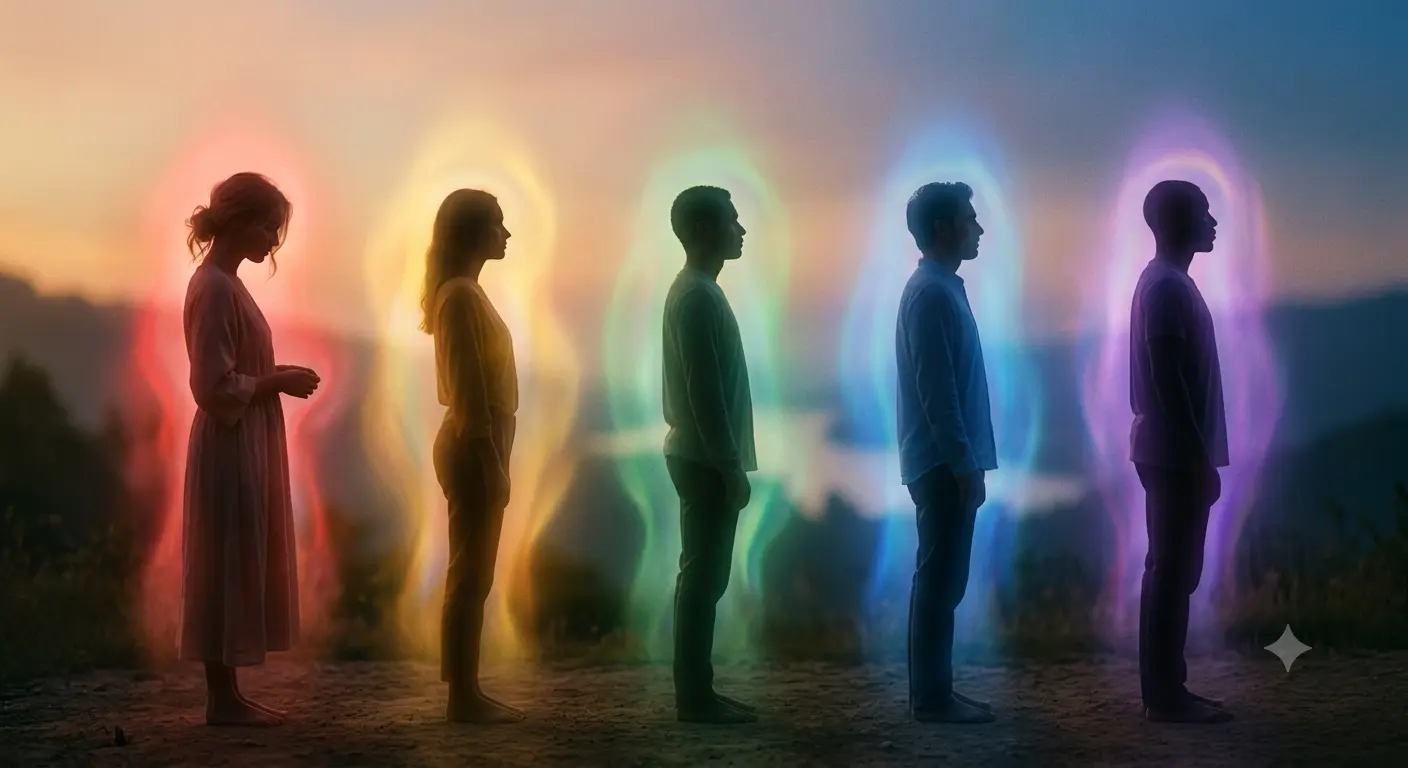
An aura is the subtle field of energy that many spiritual traditions believe surrounds every living being, often described as a band of color and light around the body. In these traditions, the aura is thought to shift with your mood, energy, and state of mind — which is why a practitioner reading it will describe not just one color, but its brightness, clarity, and layers.
One important clarification: the spiritual aura is not the same as the medical “aura.” In medicine, an “aura” refers to sensory warning signs some people experience before a migraine or seizure. This guide is about the spiritual, energetic aura — a reflective concept, with no scientific evidence that it can be measured, and no connection to diagnosing any health condition.
The World Health Organization recognizes that traditional, complementary, and integrative health practices are widely used across many cultures while encouraging continued research into their safety, effectiveness, and appropriate integration into healthcare systems.
What do aura colors mean?
These are symbolic associations drawn from various spiritual traditions — not measurements, and not indicators of any physical or mental health condition.
Each color in an aura is commonly associated with a particular energy or temperament. As a quick reference:
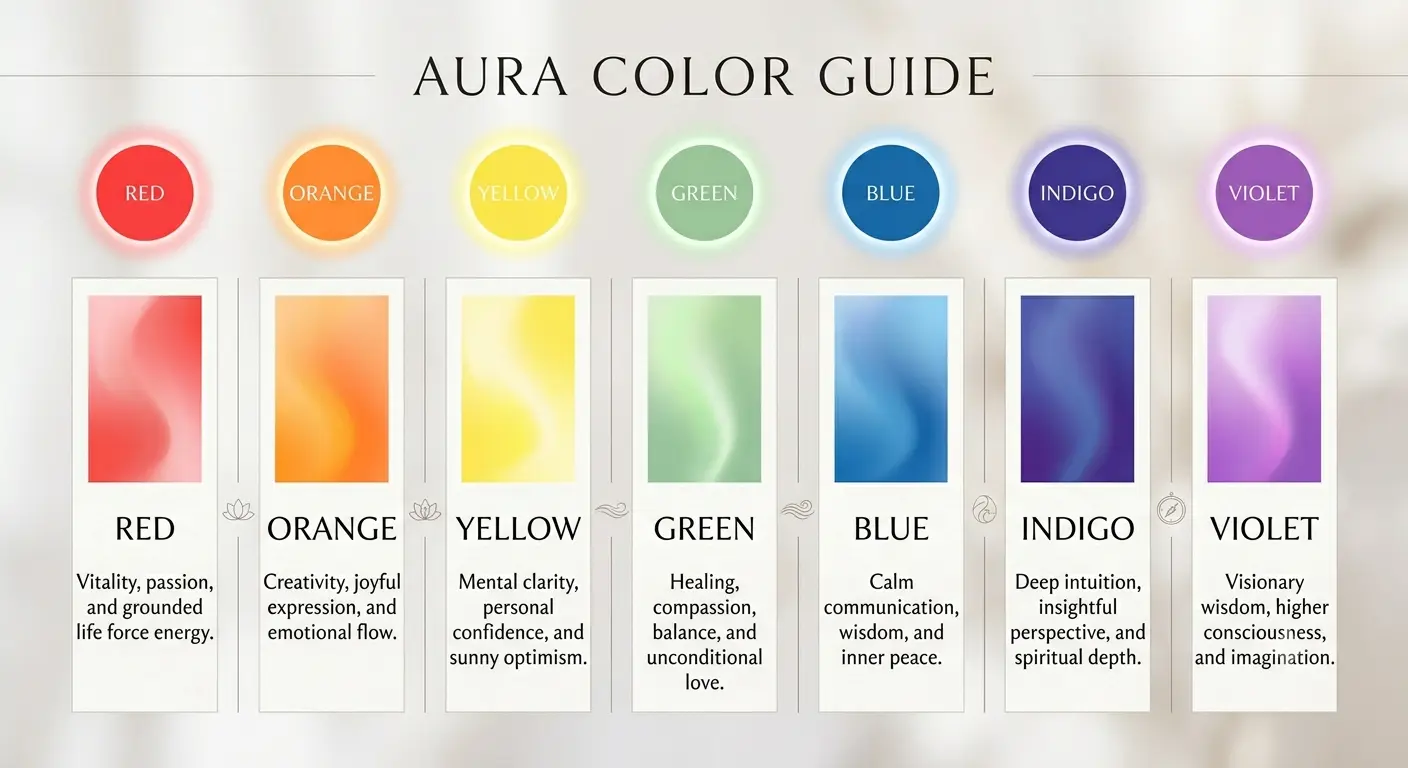
Aura colors and their meanings, color by color
Red aura
A red aura is commonly associated with vitality, passion, and a strong connection to the physical world. People described as having red in their aura are often seen as energetic, courageous, and grounded — driven by action and instinct. Brighter reds are usually read as confidence and healthy vigor, while darker or muddier reds are sometimes described as stress, frustration, or energy that’s running hot and could use grounding.
Orange aura
An orange aura is often linked to creativity, confidence, and social warmth. It’s associated with people who are adventurous, expressive, and comfortable connecting with others. Orange is commonly said to reflect emotional vitality and a healthy appetite for life’s experiences, blending the physical energy of red with the optimism of yellow.
Yellow aura
A yellow aura is commonly associated with optimism, intellect, and playfulness. It’s often linked to a bright, curious mind and a sunny, uplifting presence. Yellow is said to reflect personal power, confidence, and joy — the energy of someone who inspires others and approaches life with lightness.
Green aura
A green aura is commonly associated with balance, growth, and harmony. Sitting at the heart of the color spectrum, green is often linked to people who are nurturing, grounded, and drawn to nature and renewal. It’s said to reflect a settled, compassionate energy and a desire for equilibrium in life and relationships.
Blue aura
A blue aura is commonly associated with calm, communication, and honesty. It’s often linked to people who are thoughtful, articulate, and trustworthy, with a natural ability to express themselves and put others at ease. Deeper blues are frequently said to reflect intuition and inner peace.
Indigo aura
An indigo aura is commonly associated with deep intuition, sensitivity, and inner wisdom. It’s often linked to people who are perceptive and reflective, with a strong inner life and an awareness that seems to reach beneath the surface. Indigo is said to reflect a bridge between the emotional and the spiritual.
Violet / purple aura
A violet (or purple) aura is commonly associated with spiritual awareness, imagination, and vision. It’s often linked to people who are intuitive, idealistic, and drawn to meaning and the bigger picture. Violet is said to reflect a connection between everyday life and a more expansive, spiritual perspective.
White aura
A white aura is commonly associated with clarity, openness, and new beginnings. Considered relatively rare, it’s often linked to a sense of purity, calm, and heightened awareness. White is said to reflect an open, receptive energy — a clean slate rather than any fixed trait.
Pink aura
A pink aura is commonly associated with love, compassion, and tenderness. It’s often linked to warm, gentle, and caring people who value connection and harmony in their relationships. Pink is said to reflect a loving, sensitive energy and a natural kindness toward others.
Brown aura
A brown aura is commonly associated with groundedness, practicality, and a strong connection to the earth. It’s often linked to people who are steady, reliable, and focused on the tangible. Muddier browns are sometimes described as a need to reconnect or a period of feeling weighed down, rather than anything fixed.
Black or grey aura
A black or grey aura is commonly associated with rest, protection, or a period of releasing and processing. Rather than something “negative,” these tones are often read as energy that’s turned inward — someone protecting their space, moving through a difficult season, or simply feeling drained and in need of rest and renewal.
Gold aura
A gold aura is commonly associated with wisdom, inspiration, and high, uplifting energy. Considered uncommon, it’s often linked to a sense of inner richness, integrity, and spiritual insight. Gold is said to reflect a warm, radiant presence that others find encouraging.
Rainbow or multicolored aura
A rainbow or multicolored aura is commonly associated with dynamic, multifaceted energy — several qualities present at once. It’s often linked to creative, expressive people, or to a moment of transition and growth. Most readings actually reveal a blend of colors, since energy rarely sits in a single tone.
"Nutrition and movement matter, but real wellness includes the non-physical. Healing happens when mind, body, and spirit align."
— Rachel Lillian
Intuitive Eating Dietitian & Energy Worker
app.heallist.com/p/rachel-lillian
How to see or find your aura color

There are a few common ways people explore their aura color, ranging from simple self-practice to working with a professional:
- Soft-gaze observation. Some people try relaxing their eyes and looking just past their reflection in a mirror against a plain, light background, letting a soft haze of color come into peripheral vision. This takes practice and is highly subjective.
- Aura photography. Specialized cameras and apps use biofeedback (often from your hand) to generate a colored image. The photo is a talking point for interpretation, not a scientific scan.
- Guided meditation. Quiet, intuitive reflection can help you notice which colors or feelings come up for you.
- A session with a practitioner. The most personal option is a reading with an experienced aura reader, who tunes in and interprets what they perceive with you.
If you’d like a real, personalized interpretation rather than a guess, the clearest path is a session with a practitioner.
👉 Curious what a reader sees in your energy? Learn about aura readings and how to book one online.
What does your aura color say about you?
Aura colors are best understood as a language for self-reflection, not a fixed label or a measurement. A color you associate with today may feel different next month, because the concept is tied to mood and energy rather than to anything permanent. Read this way, exploring your aura color can be a gentle, meaningful prompt to check in with how you’re feeling.
What it is not: aura colors are not a medical or psychological assessment, and they can’t diagnose a condition or determine your personality with any objective accuracy. Enjoy them as a reflective, spiritual practice — and for any health concern, speak with a licensed professional.
Heallist Insight: Let Curiosity Lead, Not Certainty
Aura readings can encourage meaningful self-reflection when approached with openness rather than expectation. Instead of viewing an aura color as a fixed label, consider it an invitation to explore your emotions, personal growth, and overall well-being from a broader perspective.
FAQs
What do aura colors mean? Each aura color is commonly associated with a different quality — for example, red with vitality, green with balance, blue with calm communication, and violet with spiritual awareness. These are symbolic associations used for self-reflection, not measurements or health indicators.
What is the rarest aura color? White and gold auras are often described as the least common. Because aura reading is subjective and most people show a blend of colors, “rarity” is a matter of interpretation rather than fact.
What color is a positive aura? There’s no single “good” aura color — each is associated with its own strengths. Bright, clear colors of any hue are generally read as settled, healthy energy, while muddy or cloudy tones are seen as a temporary state rather than a bad sign.
How do I find out my aura color? People explore their aura color through soft-gaze observation, aura photography, guided meditation, or — most personally — a session with an experienced aura reader who interprets what they perceive with you.
Can your aura color change? Yes. In these traditions the aura is thought to shift with your mood, energy, and circumstances, so the colors you’re associated with can change over time rather than staying fixed.
What does more than one aura color mean? Multiple colors, sometimes called a rainbow or multicolored aura, are common and usually read as a blend of qualities present at once — for example, creativity and calm together — or as a sign of transition and growth.
Are aura colors real or scientifically proven? There is no scientific evidence that auras are physically measurable, and the spiritual aura is distinct from the medical “aura” linked to migraines. Aura colors are a symbolic, reflective concept many people find meaningful — not an objective measurement.
What’s the difference between an aura color and a chakra color? Chakra colors relate to specific energy centers along the body in yogic tradition, while aura colors describe the overall energy field surrounding you. They use a similar color language but refer to different concepts. Learn more in our guide to chakras and chakra healing.
Curious about what an aura reading could reveal?
Connect with trusted holistic practitioners offering aura readings, Reiki, energy healing, and other complementary practices to support self-reflection and your personal wellness journey.
→ Find Aura Reading & Energy Healing Practitioners on Heallist